
We collect basic website visitor information on this website and store it in cookies. We also utilize Google Analytics to track page view information to assist us in improving our website.
Posted August 1, 2025
Posted August 1, 2025
CHAIR fully endorses Canada’s proposed National Standard CSA Z94.4-25: Selection, Use, and Care of Filtering Respirators. This long-overdue update—especially the new Chapter 9 for healthcare—recognizes airborne transmission as the primary route for many infectious diseases and establishes stronger respiratory protections across healthcare facilities.
Read the full CHAIR Statement (PDF)
Submit your public comment by August 19
Posted July 29, 2025
The standard is clear, science-based, and long overdue.
By CHAIR (Coalition for Community and Healthcare Acquired Infection Reduction)
The petition opposing CSA Z94.4-25 contains serious misrepresentations. As experts familiar with both the CSA process and respiratory protection science, we offer the following clarifications to help set the record straight.
The CSA Standard Is Evidence-Based and Clear
What the Standard Does Not Say
Contrary to claims in the petition:
The CSA Process Is Transparent and Balanced
Respirator Use ≠ Commercial Windfall
A Moment to Build Trust, Not Undermine It
Final Thought
Opposition to increased respiratory protection in healthcare when one-third of respiratory disease in hospitals (Flu, RSV, and CoVID) is caused by the hospital itself is the antithesis of precautionary, protective, or scientific in nature.
The CSA committee has done commendable work. At this point, it’s imperative they receive support to see this standard through. We have an opportunity in Canada to move beyond outdated paradigms to align healthcare worker and patient protection with the care, concern, science, and ethics people deserve and the sustainability our healthcare system needs.
Click here to download the PDF version of this response.
Earlier this month, CHAIR board members Barry Hunt and Richard Dixon led engaging Lunch and Learn sessions for the BC IPAC Community of Practice, with a focus on the Environmental Infection Prevention (EIP) framework and CSA standards.
The feedback was overwhelmingly positive — so much so that attendees came together to share their appreciation in two GroupGreeting cards. The messages reflect not just gratitude for the information shared, but for the clarity, care, and leadership both Barry and Richard consistently bring to the infection prevention space.
Here’s a look at just a few of the many kind notes received:
“Your presentations were a big success… We are honored to have partnered with you.”
“I have heard you present many times — it is always enlightening.”
“The topics were very informative and engaging.”

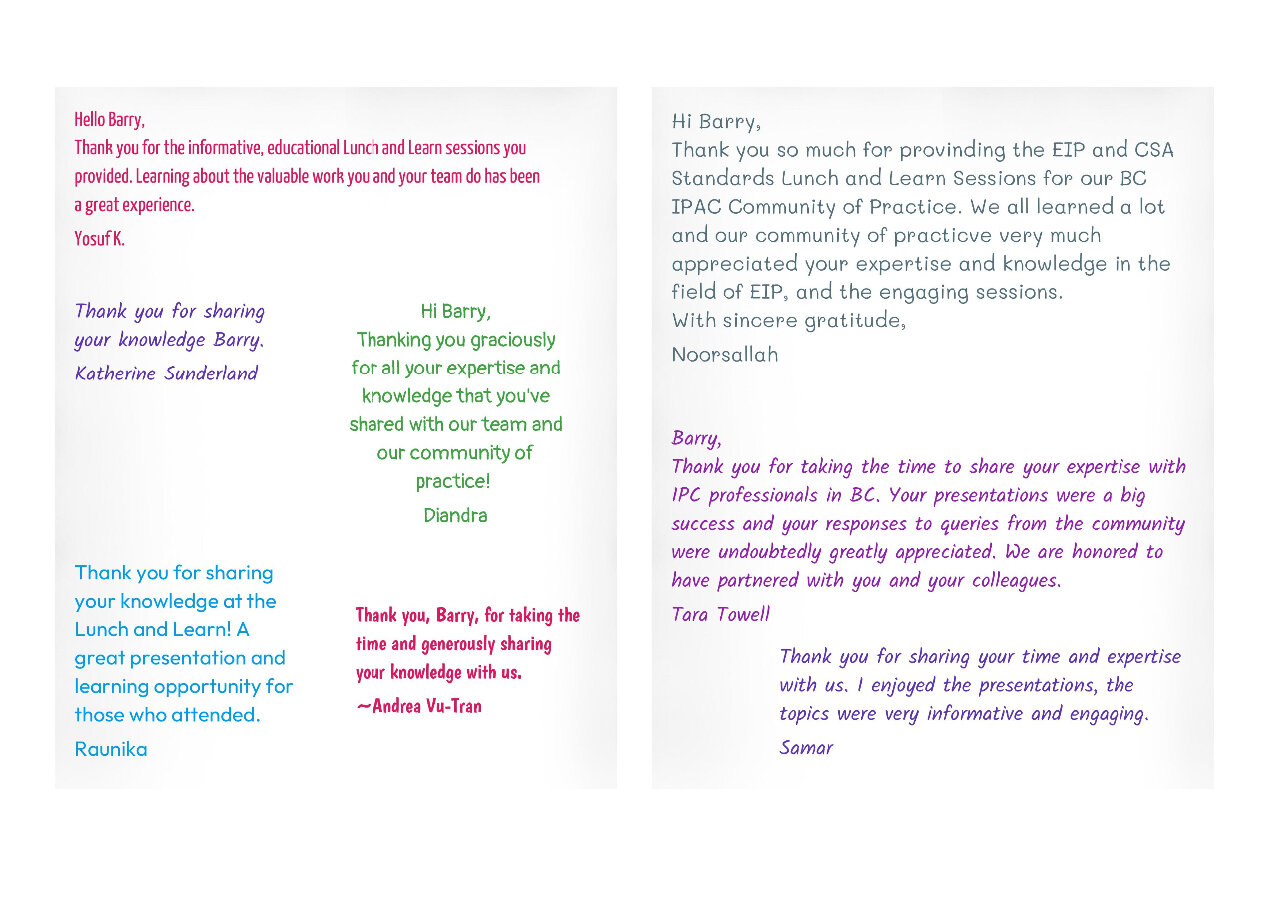
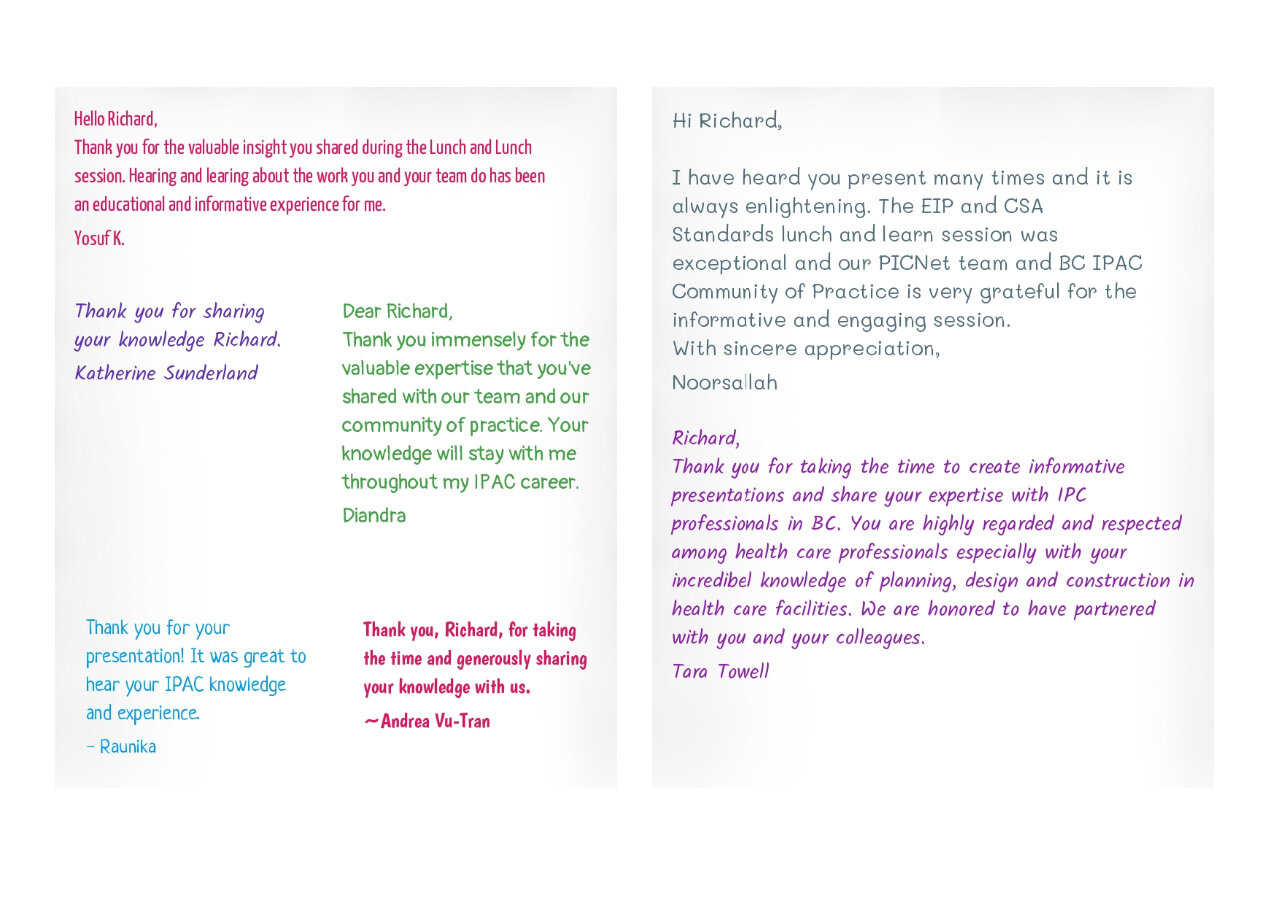
We’re grateful for the time, energy, and insight Barry and Richard continue to share with the CHAIR community and beyond.
Exciting News from CHAIR! ✨
We’re thrilled to share that two CHAIR board members recently met with Chemical Engineering Professors at the University of Waterloo to explore future collaborations! The focus? How CHAIR can contribute to their engineering program by sharing our extensive research on Engineered Infection Prevention strategies!
Over the years, CHAIR has conducted significant research on the efficacy, specifications, and usage of innovative infection prevention products such as antimicrobial copper, ultraviolet light in the C wavelength, ozonated water, and more.
For example, our 2.5-year research project used antimicrobial copper products from three different companies installed on transit vehicles (subway trains and buses) with Vancouver Transit and Toronto Transit Commission. This study showed very high antimicrobial and virus efficacy, with valuable lessons learned about the application, locations, wearability, and standard cleaning & disinfection practices of the facilities staff.
Bus and subway engineers were involved in the planning, design, and testing setups, while clinical staff conducted routine planning and testing. Laboratory staff at Vancouver Coastal Health and North York Hospital handled the clinical analysis and reporting. What makes this project unique is that, unlike typical research conducted in stationary healthcare or community facilities, these sample sites were in constant motion throughout the city. And yes—antimicrobial copper makes transit ridership safer for the public.
Next, we will meet with the Engineering Entrepreneur departments at both the University of Waterloo and the University of Toronto to continue these exciting conversations.
By bringing real-world applications and learnings to academic settings, we aim to enhance students' understanding of how these cutting-edge technologies help reduce infections and improve public health. ✨
.png)
CHAIR Coalition has been at the forefront of infection prevention solutions for over a decade, and our work is more crucial than ever.
In our latest newsletter, we dive deep into:
- Innovative Solutions: From safe sink and drain designs to Reactive Oxygen Species (ROS) water technology that revolutionizes disinfection.
- Health Canada Collaboration: Simplifying UV equipment regulations to ensure safe and effective disinfection.
- CSA Standards: Leading the renewal of Canada's national standard for cleaning and disinfection in healthcare.
Discover how Barry Hunt, a leading voice in healthcare, is shaping patient-centered standards for safer, more efficient environments. His insights are a must-read for those in healthcare design and operation. Open the PDF to explore his valuable contributions.
Discover the latest updates and insights on infection reduction and community safety in our Fall Newsletter.
CHAIR 2022 Leadership Award Winners - Healthcare - June 8, 2023
CHAIR 2022 Leadership Award Winners - Community - June 6, 2023
CHAIR 2021 Leadership Award Winner – Dr. Victor Leung – June 21st, 2022
CHAIR Renewal and Enhanced Strategic Direction – March 29th, 2022